The People With the Best Stories Have Hobbies
There is a certain kind of person who always seems to know something weirdly specific.
They can identify three birds by sound, make friendship bracelets that look suspiciously professional, know how to use a film camera, played volleyball for exactly one season, and somehow also have very strong opinions about old horror movies.
That person is rarely boring.
Not because they are trying hard to be fascinating. Usually the opposite. They just keep trying new things.
Somewhere along the way, we got very good at sorting people into categories. The athlete. The theater kid. The gamer. The quiet one. The skater. The person who wears black every day. The person who somehow owns twelve Stanley cups.
But real people are much messier than that.
You can love heavy metal and Taylor Swift. You can spend Friday night at a football game and Saturday afternoon learning how to make macarons. You can be obsessed with makeup and astronomy. You can play soccer, read fantasy novels, make jewelry, and decide completely out of nowhere that you want to learn Korean.
None of those things need to match.
Which makes it even better!
Hobbies give you somewhere to go without forcing the rest of your personality to come with you. You get to try something because you are curious, not because it fits whatever version of yourself everyone already knows.
And there is some pretty good evidence that having those things in your life matters.
A 2024 study of more than 14,000 adolescents found that teens who genuinely enjoyed their organized leisure activities reported better well-being. The important part was not simply being busy. Enjoyment mattered. Young people who felt pushed into activities they did not actually like did not seem to get the same benefit.
Which feels obvious until you remember how many people have spent three years doing something because their parents already paid for the uniform.
The goal is not to fill every afternoon until your calendar looks terrifying. It is to find something you genuinely like enough to lose track of time doing it.
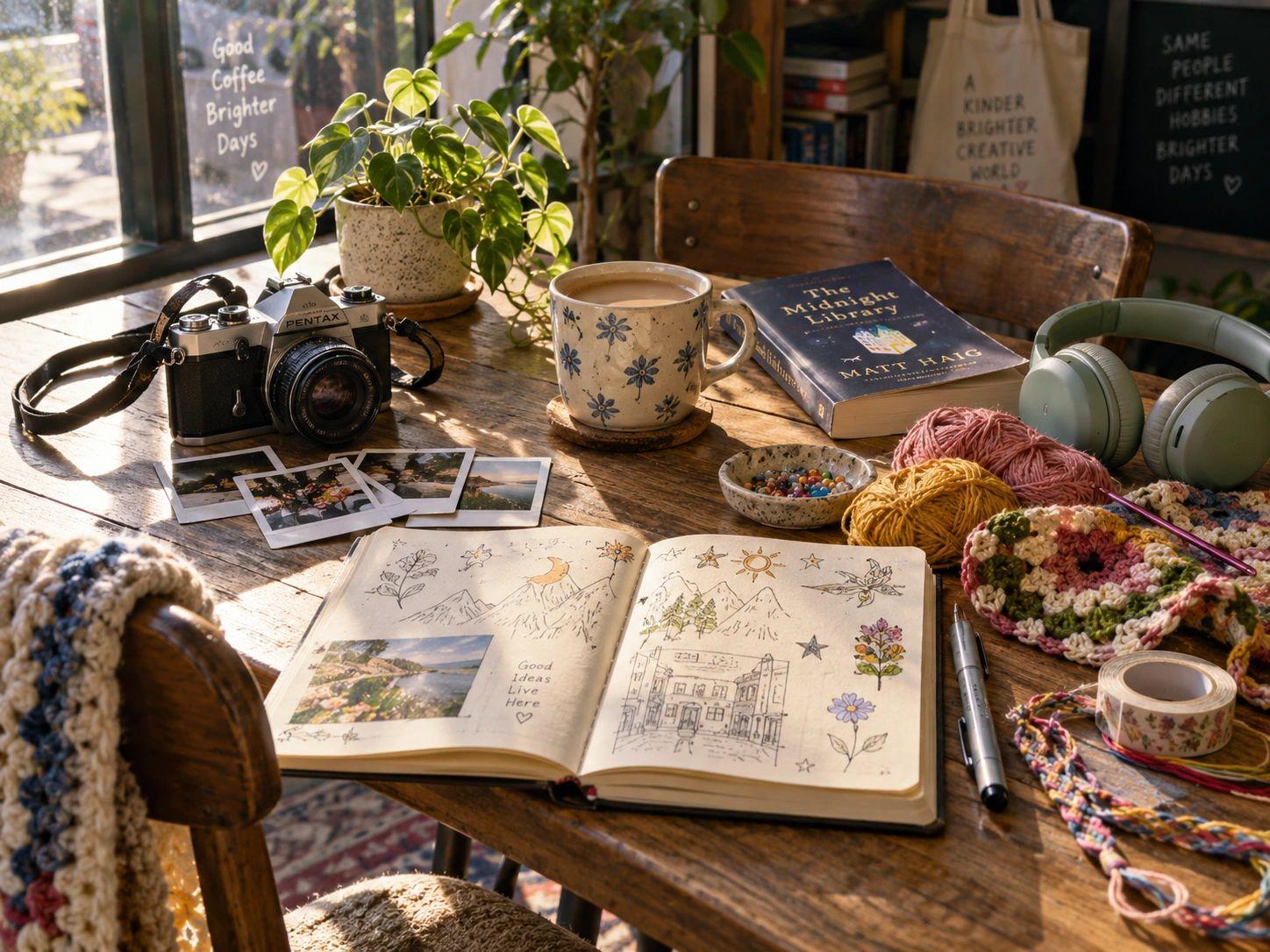
Maybe that is basketball. Maybe it is baking. Maybe your friend convinces you to join yearbook and you accidentally discover you love photography. Maybe you decide to crochet a sweater and six weeks later you have produced one extremely aggressive scarf.
Still counts.
There is something nice about getting better at something nobody is grading.
Your first drawing can be terrible. Your first attempt at skateboarding can involve significantly more falling than skating. You can learn three songs on guitar and play the same three songs for six months.
Nobody cares.
There is no GPA for hobbies.
That might be one reason they feel different from so many other parts of growing up. School gives you grades. Sports give you scores. Social media gives you numbers. College applications want achievements. Jobs eventually want experience.
A hobby can just be yours.
Research on everyday creativity has linked creative activities with positive emotions and feelings of competence, independence, and connection. In normal-person language, doing things instead of just consuming them can feel good.
Watching somebody decorate a cake is satisfying.
Making one yourself, even if it ends up leaning slightly to the left, is a completely different experience.
Hobbies also have a strange way of making your world bigger.
You take one ceramics class and end up talking to someone studying architecture. You start hiking and discover a trail ten minutes from your house that you somehow never knew existed. You learn one song on guitar and suddenly you are listening to music recorded forty years before you were born.
One thing leads to another.
That is how people end up with stories.
Ask someone what they watched last night and you might get the name of a show. Ask why they know how to restore an old motorcycle and suddenly you are hearing about summers in their grandfather’s garage.
Ask why someone collects vinyl and maybe they tell you about the first record their mom gave them.
Ask why they know so much about sharks and there is probably a story there too.
People with range usually have a trail behind them. Things they tried. Things they quit. Things they loved for three months. Things they unexpectedly became good at. Things they are still terrible at but refuse to stop doing.
And quitting does not ruin the experience.
You are allowed to try photography and decide you prefer being in the pictures. You can take dance lessons for a year and then move on. You can become briefly obsessed with gardening, kill three basil plants, and decide that maybe plants deserve someone more qualified.
Trying something does not mean you signed a lifetime contract.
That might be one of the best parts.
You do not have to turn every new interest into an identity. You do not have to become the guitar person because you learned three chords. You do not need to rebuild your wardrobe because you discovered punk. You do not need to start selling your cookies because everyone says they are good.
You are allowed to like something without needing it to become anything bigger.
There's evidence that openness to new experiences and creativity are connected. That does not mean collecting random hobbies will magically turn you into a genius. It does suggest that exposing yourself to different things gives your brain more material to work with.
Different people. Different skills. Different music. Different ways of looking at something.
You start collecting pieces of the world.
And eventually those pieces start showing up in the way you think, the things you make, the conversations you have, and the stories you can tell.
Maybe being well-rounded was never about being good at everything.
Maybe it is just about staying open long enough to find out what else you might like.
Because the people with the best stories usually did not get all of them by staying in one lane:)