Buy Now, Regret Later?
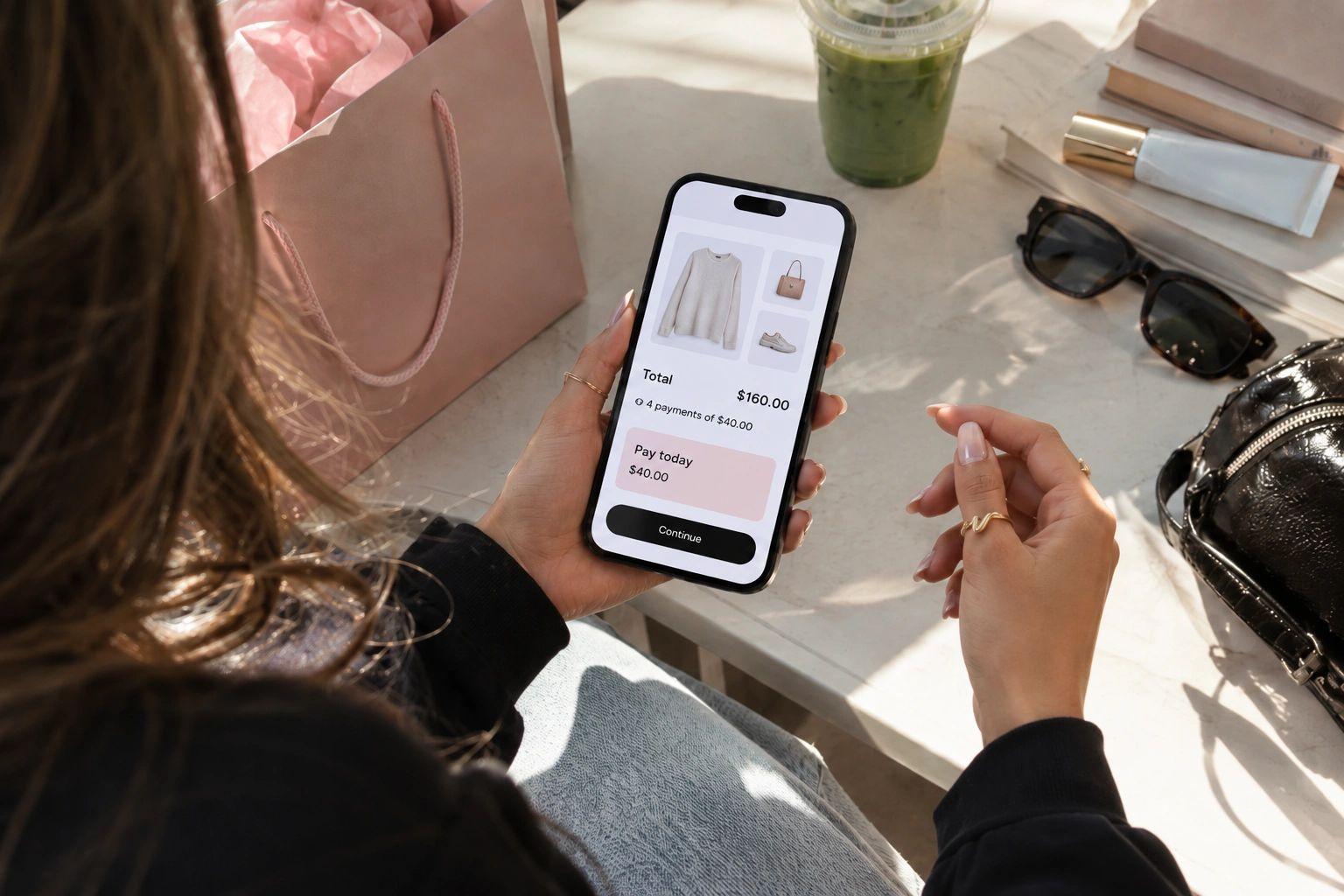
Paying in four can be a smart way to keep cash in your account. It can also make a $160 purchase feel suspiciously like a $40 one.
Picture this: You’re checking out online with the prom dress you’ve been thinking about for two weeks, or maybe it’s tickets to see your favorite artist, and the total comes to $160. It’s not completely out of reach, but it is enough to make you hesitate for a second.
Then you see the other option: $40 today.
Suddenly, $160 doesn’t feel quite so expensive.
That small shift is part of what makes Buy Now, Pay Later (BNPL) so appealing. Services like Afterpay, Klarna, Affirm and PayPal let you take the thing home now while splitting the cost into installments, usually over several weeks. When your money is already being divided between gas, food, school, weekend plans, beauty products and everything else that somehow finds its way onto your debit card, keeping an extra hundred dollars in your account can feel pretty useful.
And sometimes it is.
BNPL has become common enough that clothing and accessories are now the most popular things people use it for. According to the Federal Reserve, 49 percent of BNPL users bought clothing or accessories with it in the previous year, and that number rose to 56 percent among women. Federal Reserve
The better question is what the smaller payment is doing to the decision.
There is a perfectly reasonable case for splitting a purchase. Say you have $300 in your account and want something that costs $160. You could pay for it outright, but maybe you would rather keep more of that money available because you still need gas, groceries, or simply some breathing room until the next time you get paid. Dividing the purchase into smaller payments lets you hold onto more of your cash while paying the same total over time.
That is cash-flow management. You already have the money. You are just deciding when you want it to leave your account.
The situation changes when you only have $40 and the $40 installment is the reason a $160 purchase suddenly feels affordable. Now you are not rearranging money you already have. You are making a decision with money you expect to have later.
That distinction sounds obvious when it is written out, but checkout pages are very good at making it feel less obvious in the moment.
A $120 jacket feels different when the number beside the payment option is $30. You know the jacket still costs $120, of course, but $30 is the number your brain has to say yes to right now.
Then maybe a beauty order is $18 today. The shoes are $27. The concert ticket is another $35. None of those payments looks particularly alarming by itself, especially if you made the purchases on different days.
The problem comes when the payment dates begin running into each other.
CFPB research found that 63 percent of BNPL borrowers had multiple loans running at the same time at some point during the year studied, while one-third used more than one BNPL provider. Consumer Financial Protection Bureau
That is how a handful of reasonable-looking payments can quietly claim a decent piece of a paycheck before you even get to decide what to do with it.
There is another part of BNPL that can make the line between access and affordability a little blurry. With some services, consistently paying on time can increase the amount you are allowed to spend. Afterpay, for example, says on-time payment history is one factor that can help maintain or increase a customer’s available-to-spend amount. Afterpay
That can feel like progress. You started with a lower amount, paid everything when you were supposed to, and now the app says you can spend more.
But your spending power increasing is not the same thing as your income increasing.
If an app tells you that you have $600 available, it can be surprisingly easy to start treating that number like part of your budget. It is not. It is simply the amount the company may be willing to let you finance.
A bigger limit is not a raise.
None of this makes BNPL automatically bad. Used deliberately, it can be convenient. Paying in four can help you keep more cash available, spread out a planned expense, and avoid putting one larger charge on a credit card. If you already saved for a laptop, a trip, a dress, or concert tickets, splitting the cost may simply work better for your budget.
The downside is that convenience can make it easy to lose track of what is already spoken for.
The Federal Reserve found that 11 percent of BNPL users had a payment trigger an overdraft or insufficient-funds fee in the previous year. Overall, 26 percent said they had paid late at least once.
That is a useful reminder that interest-free does not always mean consequence-free.
Before you choose Pay in 4, it helps to ignore the installment amount for a second and look at the actual price.
Could you pay the full amount today if you absolutely had to?
If the answer is yes and you are choosing installments because keeping more cash available works better for your budget, then you probably already know what you’re doing.
If the answer is no, ask yourself one more question: Would you still buy it if the checkout page showed only the full $160?
If the smaller payment is doing most of the convincing, that tells you something.
Buy Now, Pay Later can be a smart tool when you are using it to decide when your money leaves your account. It becomes much easier to get caught in a cycle when the installment is what makes the purchase feel affordable in the first place.
You are still buying the $160 dress.
You are just paying for it four different times.